

Interview: Jesper Koll on Tokyo’s Next Chapter as a Global Financial Centre
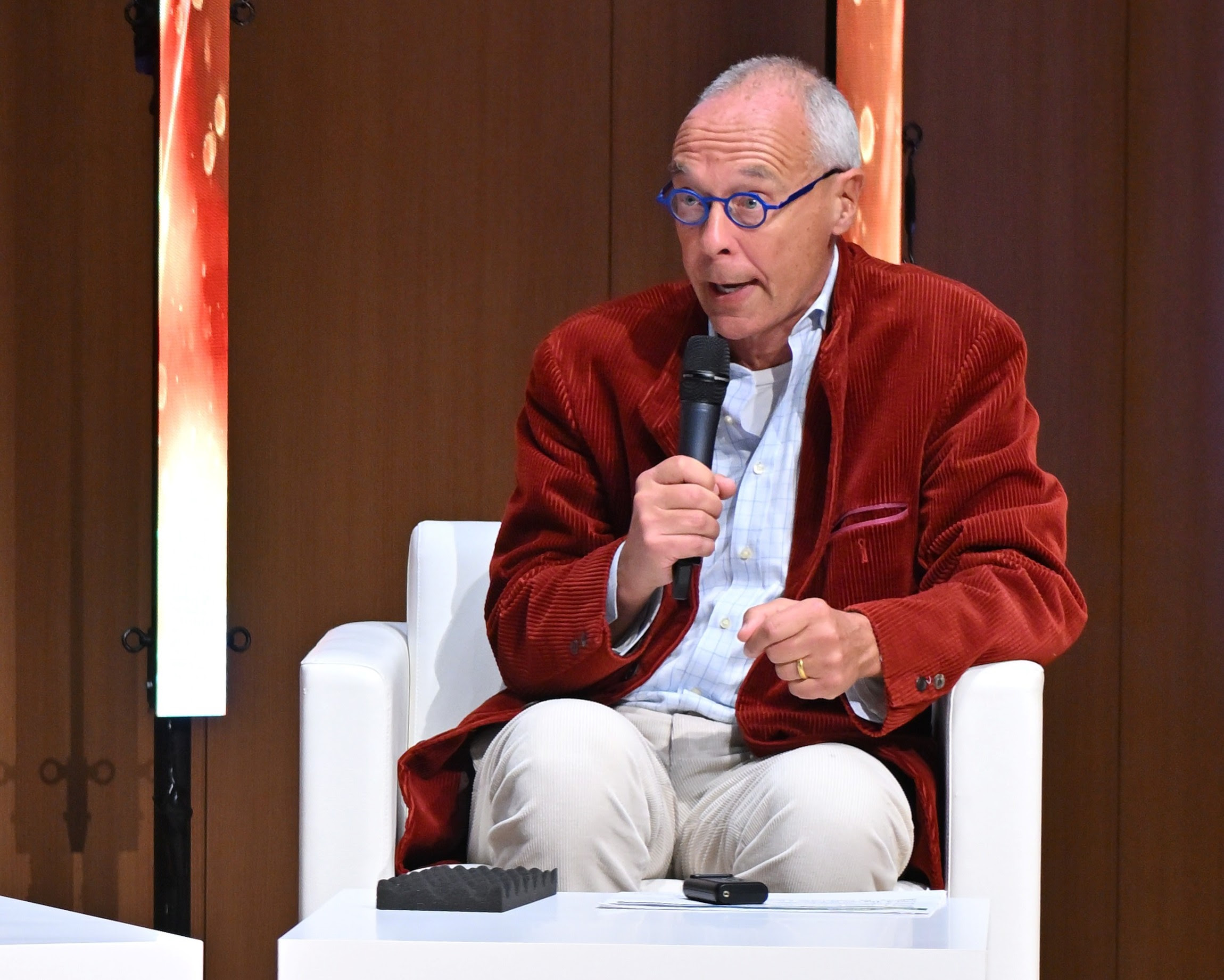
Jesper Koll, FinCity.Tokyo Ambassador and well-known media commentator on Japan’s economy, shares his perspective on Tokyo’s evolution as an international financial centre, Japan’s changing investment environment, and why he believes Tokyo can become a high-trust financial hub in an increasingly uncertain world.

You have been a FinCity.Tokyo Ambassador for several years. How did that relationship begin, and what has your role involved?
After Governor Koike came to power, she reached out to me for help in establishing Tokyo as a financial hub, drawing on my previous work at JPMorgan and with the Liberal Democratic Party.
There had been similar initiatives every few years, but without much momentum. Governor Koike offered a different approach: bringing all the relevant constituents together — not only the Tokyo Metropolitan Government, but also regulators, the Government Pension Investment Fund (GPIF) and other national and local stakeholders. FinCity.Tokyo would serve as a kind of control tower, connecting private-sector demand with regulators and public authorities. I saw this as the first real opportunity in my 40 years in Japan to make a coordinated effort to establish Tokyo as a leading international financial centre.
As an Ambassador, I have participated in FinCity.Tokyo’s various outreach programmes to New York and elsewhere, and also spoken at the flagship FinCity Global Forum. Through my work with pension funds, mutual funds, family offices and others, I also have opportunities to connect investors and financial professionals with Tokyo. As Tokyo becomes increasingly attractive for businesses, there is a growing need to connect international firms with FinCity.Tokyo’s support and concierge functions.
Just as importantly, we need to engage with visitors from other financial centres. Finance is global by nature, so we have an opportunity to learn from one another.
How do you assess Tokyo’s evolution as a financial centre over the past few years?
There has been real progress and a very strong commitment to change.
One important development was Japan’s launch of the Asset Management Initiative under Prime Minister Kishida. The broader idea is to improve financial services for retail investors and encourage households to make better use of their assets.
For much of the past 15 to 20 years, Japan’s approach to financial reform was defensive and often driven by external pressure. Over the past four or five years, Japan has become much more proactive. Japan is increasingly moving from reacting to international pressure to helping shape global standards. That is a very important change in mindset.
What recent developments in Japan’s financial markets should be on the radar of global investors?
The most important development around Tokyo and the Tokyo Stock Exchange’s governance reforms is that finance is no longer treated as an afterthought. It is becoming a central consideration for corporate management. The opportunity in Japan is enormous.
Another major change is the movement of household assets. Rising interest rates and inflation are putting pressure on purchasing power, while the inheritance of assets from the baby-boomer generation is creating a major transfer of wealth. Over the next decade, assets equivalent to around 1.2 times Japan’s national GDP are expected to be transferred to the next generation.
This change in the country’s financial metabolism presents financial institutions with new opportunities. Policymakers are also highly focused on ensuring that the movement of money from savings into investment happens efficiently and effectively.
Finally, there is the Government’s timely and ambitious plan to invest in 17 priority fields by 2040. For investors, Japan is effectively providing a map of where future opportunities are expected to emerge. Government backing for long-term projects can help facilitate investment in these sectors, while policy support can provide a foundation for new technologies to develop through 2040. I should note that the model is expected to rely heavily on public-private partnerships, with government funding accounting for only a relatively small portion of the overall investment.
What is changing as a result of Japan’s corporate governance reforms?
Historically, shareholders and asset owners had relatively limited influence over corporate decision-making in Japan.
The recent governance reforms represent a coordinated effort involving (Ministry of Economy, Trade and Industry (METI) , FinCity.Tokyo and the Financial Services Agency (FSA) to change the way boards think about their responsibilities. Boards are increasingly expected to consider the interests of all stakeholders rather than simply protecting the status quo.
They are also now better positioned to evaluate takeover bids objectively, including with the involvement of third parties. This creates pressure as well as opportunity. For international investors, Japan is becoming a market where corporate control and capital allocation matter much more than they did in the past. There is also increasing access to leverage from Japanese banks for investors such as venture capital and activist funds. Greater access to financing for foreign firms can increase liquidity and create opportunities across the financial services sector.
Looking ahead, where would you like to see Tokyo as a financial centre in the next few years?
Japan has transparent rules and regulations, and, importantly, those rules are transparently enforced. In an increasingly polarized and unstable world, I believe that Tokyo has the potential to become an honest broker and a safe haven.
I would like Tokyo to become the world’s high-trust financial centre. Green bonds and green finance, for example, carry a risk of greenwashing. Tokyo offers an environment where that risk is relatively low. The proposition should not be about making a quick buck. It should be about creating a resilient, sustainable and high-trust financial environment with deep liquidity. Tokyo’s great advantage here is Japan’s deep commitment to the rule of law, clear regulations and established processes. The rules do not change on a whim.
Yes, in Japan, the takeoff time can be longer because of regulations, procedures and bureaucracy. But in return, investors gain resilience and opportunity. Japan’s financial market is also relatively apolitical, with a unified financial regulator in the FSA and limited political interference in financial-market regulation. In an increasingly uncertain global environment, this gives Tokyo a significant premium as a financial safe haven.
I think FinCity.Tokyo has a very important role to play as a channel into Tokyo for businesses and investors, and I look forward to continuing supporting that work.

Related
関連記事