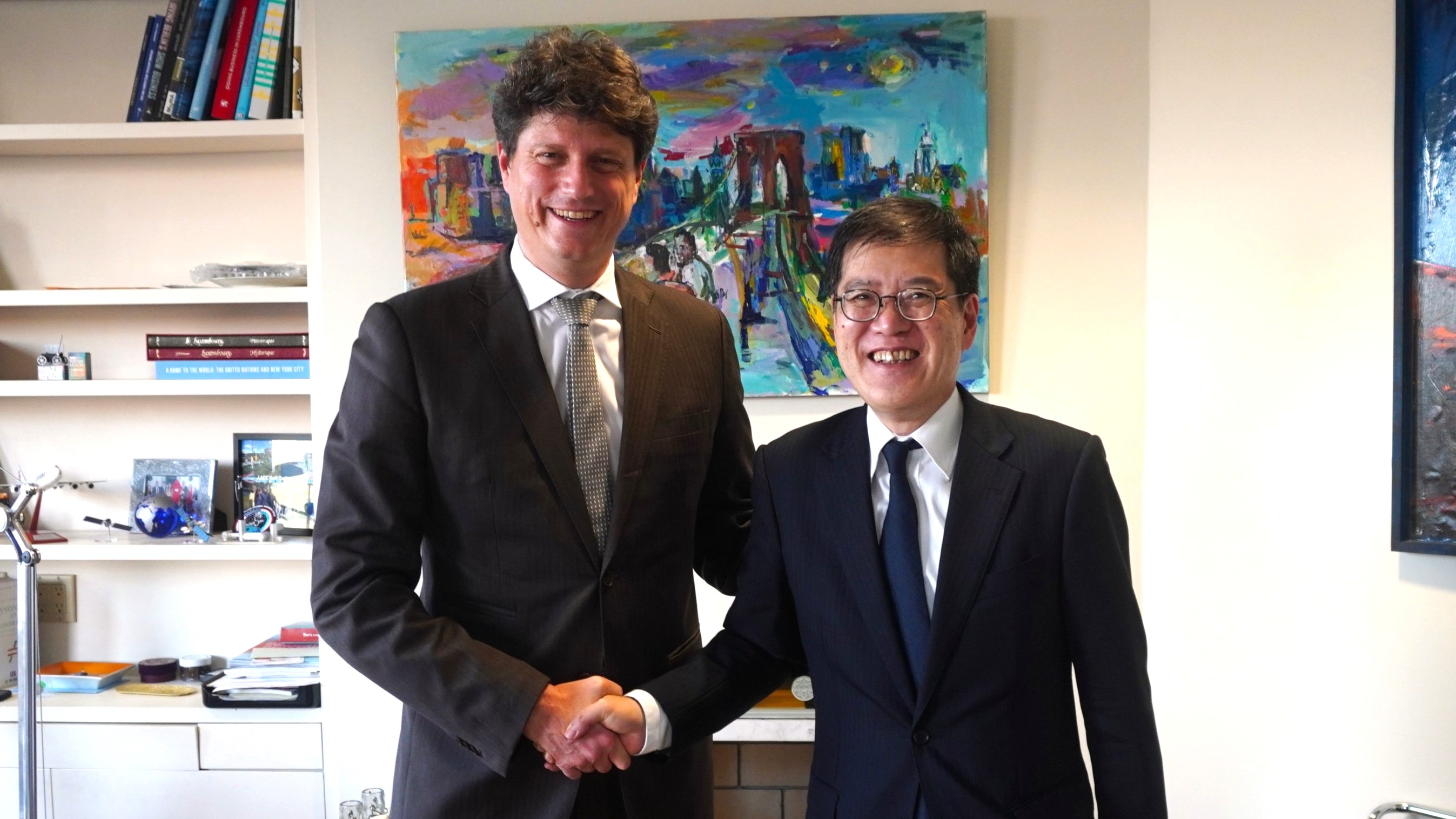


Interview: The Deutsche Bundesbank on Financial Cooperation Between Tokyo and Frankfurt
Dr. Eugen Cleveland, Deutsche Bundesbank representative for Tokyo, discusses the growing financial collaboration between Tokyo and Frankfurt following a recent memorandum of understanding between the financial-center promotion organisations of both cities, the momentum for digital finance in Europe and Japan, and how the two markets can learn from each other.
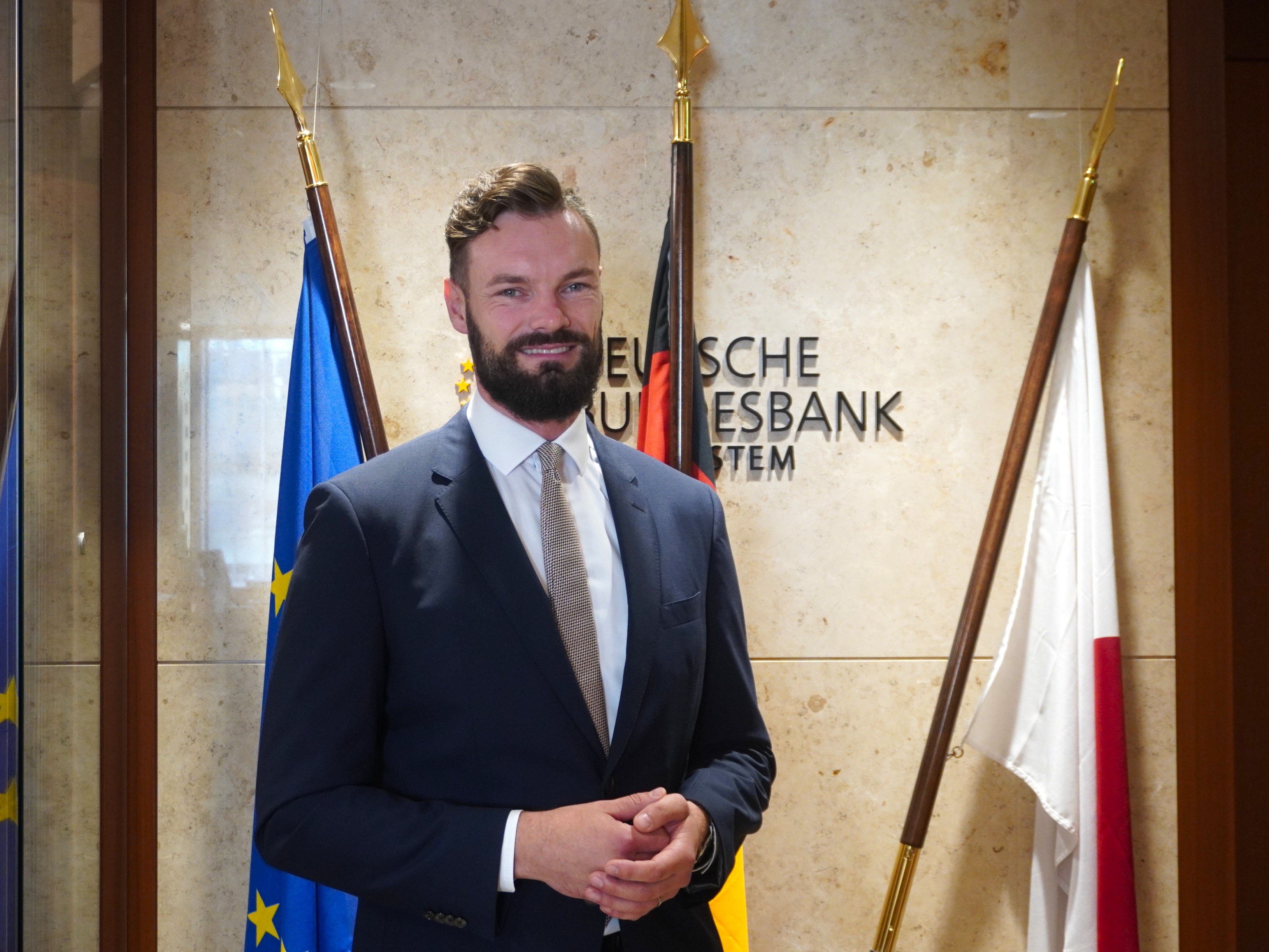
Following the MOU with Frankfurt Main Finance, Bundesbank has joined FinCity.Tokyo as a special member. What motivated you to join?
The Bundesbank has been in Japan for almost 40 years, and we’ve built many strong relationships here, including with the Bank of Japan (BoJ), Ministry of Finance, the Financial Services Agency (FSA), and others. Still, we want to expand past that point. FinCity.Tokyo has a diverse network of members all across finance, including banks, insurers, and more, and this is a network we want to leverage to reach the broader financial community.
Our exchange with the Japanese authorities and the financial industry also provides opportunities to share perspectives on how regulation and supervision across borders can keep pace with developments in digital finance. We have a particularly close relationship with the BoJ, with whom we also exchange best practices and ideas.
Finally, I believe the Bundesbank can learn a lot from developments here in Tokyo, particularly Japan’s experience with financial education and household investment initiatives such as J-FLEC and NISA. All in all, this membership with FinCity.Tokyo is a chance to strengthen mutual understanding and contribute to Tokyo and Frankfurt’s already strong relationship.
In your view, why is finance collaboration between Japan and Germany important at this time?
Our two countries have complementary strengths, particularly beyond domestic markets. Germany brings a strong industrial base, and access to the European market. Japan provides advanced technology and financial relations in Southeast Asia. What’s more, there are many investments going both ways. Both our countries rely on open markets and solid rules, being export-driven countries.
Strengthening this cooperation is crucial in these rapidly changing times when the world is facing so many challenges. Both countries face sustainable investment needs, including in the energy transition and digitalisation. Mobilising capital for these investments requires a stable and well-functioning financial system. Central banks contribute to this by safeguarding monetary and financial stability within their respective mandates.
This makes it particularly valuable to exchange knowledge and experience on financial market infrastructure and payment systems, including among central banks. As an example, we had a project where the Bundesbank presented on the progress of the digital euro, and the BoJ and Ministry of Finance came here to share their work on a central bank digital currency.
Can you elaborate on this central bank digital currency project? What are the benefits of that?
The underlying idea is that we are moving towards an increasingly digital world. In the euro area, cash is currently the only form of central bank money available to the general public. For everyday digital payments, people generally rely on commercial bank money, accessed through instruments such as cards or payment apps. From the Eurosystem’s perspective, Europe’s reliance on non-European payment providers is a concern. The Eurosystem is therefore working on a digital euro as a complement to cash. It would not bear interest, payments would be final, and it would allow offline payments.
The key question is adoption. I believe the whole world is watching how this will be implemented and adopted by the public.
What key developments in German finance should be on global investors’ radar, and how do you see Tokyo contributing?
As recent announcements of large international companies show, Germany is an attractive place to invest. The German economy is currently in an upswing, driven particularly by a surge in government spending on defense. This can also create opportunities for private investment.
While Europeans save a lot, too little of that money is invested in European businesses and capital markets. To address this, the EU is working on a Savings and Investments Union. This initiative – which is strongly supported by the Bundesbank – is aimed at channeling more of Europe’s savings into productive investments. It should help businesses grow, strengthen European capital markets, and improve long-term wealth creation for EU citizens. Moreover, it would make Europe more attractive for foreign investors.
When I hear of startups moving to the US due to the availability of venture capital, I think it is a pity, because Europe loses out on promising companies. This underscores the importance of deeper and more integrated European capital markets. Germany is strengthening capital-based pension provisions. This is another positive step toward fostering long-term investment. To some extent, it is comparable to Japan’s NISA program.
Japan also has interesting initiatives to promote financial literacy, an area in which the Bundesbank is already active and where we can benefit from exchanging experiences.
Lastly, the finance sector in Europe is undergoing technological transformation, including the growing use of tokenization and the Eurosystem’s ongoing work on the digital euro. Tokyo has a part to play because Japanese companies are well established in Germany´s digital infrastructure and have a great deal of valuable experience.
So you look to Japan for inspiration in building resilience and stability?
Definitely yes. We exchange views with the BoJ on financial stability and innovation, and with other Japanese institutions, including the FSA and J-FLEC, on financial education and household investment. We share these insights with our colleagues in Germany and bring them into relevant discussions.
Where do you see Germany-Japan collaboration heading over the next few years?
We have to watch digital spaces most closely, such as tokenization, payments infrastructure, etc. With the growing use of AI, we’ll see a lot of innovation in those sectors. In the next five years, we should also see how the digital euro is adopted, which Japan of course will be watching closely. These developments also require regulators and supervisors to keep pace with innovation, while ensuring that emerging risks are properly addressed. The EU’s AI Act is one example of how regulatory frameworks are adapting to technological change.
This will take an increased flow of ideas between Japan and Germany. We need to share even more than we do now. That’s why we keep an office here in Japan, to build long-lasting relationships, which is something you can only really do in person. Virtual exchanges are valuable, but a local presence makes it much easier to build lasting relationships and mutual trust. And that’s what we intend to do here, to have a continuous presence and intensive collaboration.

Related
関連記事