


Newsletter_FINCITY.TOKYO UPDATE (September 2026)
Updates from Tokyo’s expanding finance and startup ecosystem and the 65 members of FinCity.Tokyo.
Special Interview
Interview: Jesper Koll on Tokyo’s Next Chapter as a Global Financial Centre

Jesper Koll, FinCity.Tokyo Ambassador and well-known media commentator on Japan’s economy, shares his perspective on Tokyo’s evolution as an international financial centre, Japan’s changing investment environment, and why he believes Tokyo can become a high-trust financial hub in an increasingly uncertain world.
View the full interview here
Other Updates
FinCity.Tokyo Global Forum in NEW YORK CITY, October 15, 2026
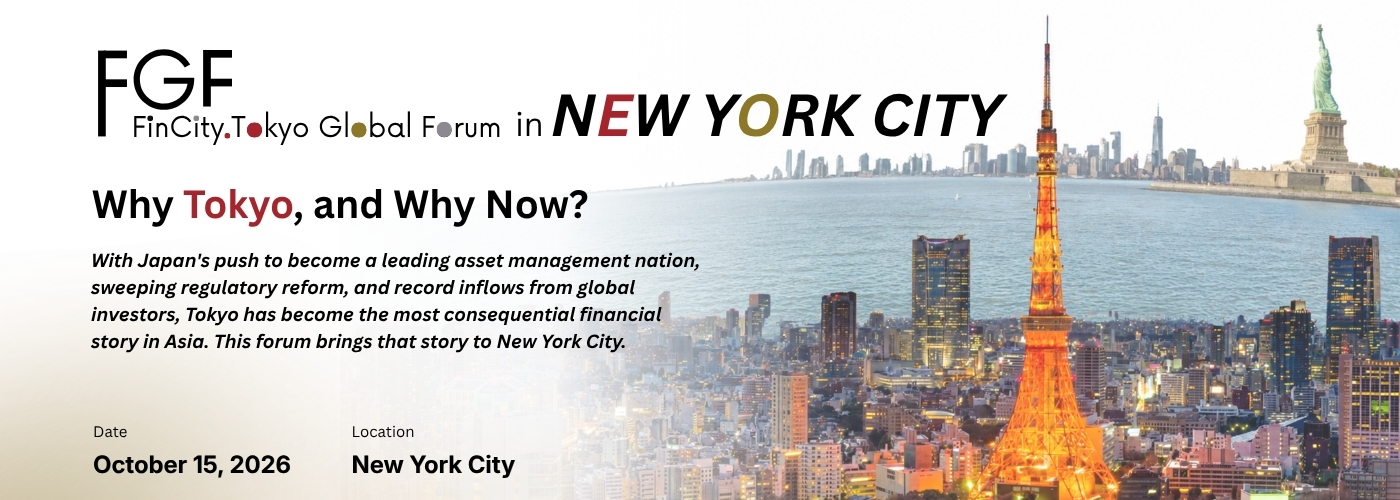
Tokyo is entering a new phase of financial market development. Asset owner reform, corporate governance progress, support for emerging managers, and rapid advances in AI are changing how global investors assess Japan. FinCity.Tokyo Global Forum in NEW YORK CITY 2026 brings these themes to the center of global finance.
The forum connects Tokyo’s public and private financial leadership with senior decision-makers in New York, creating a platform for direct dialogue, investment insight, and long-term relationships.
The forum will focus on three key themes:
- Global Financial City: Discussions will explore Japan’s corporate governance reforms, the government’s Asset Management Oriented Nation strategy, and the investment approach of the Government Pension Investment Fund (GPIF), highlighting the evolution of Tokyo’s financial markets and opportunities for global investors.
- Artificial Intelligence: Speakers will examine investment opportunities and infrastructure needs created by frontier AI, as well as questions around AI governance and Japan’s potential role in trusted and geopolitically neutral AI development.
- Family Offices and Private Capital: The forum will explore how U.S. and Japanese family offices and long-horizon private capital are reshaping global allocation, including sustainable and direct investment, and why Japan is emerging as an attractive destination for family office investment and collaboration.
Don’t miss the opportunity to hear from Tokyo and Japan’s financial leadership, including Hiroshi Nakaso, Chairman of FinCity.Tokyo; Yutaka Ito, Commissioner of Japan’s Financial Services Agency; and Kazuto Uchida, President of the Government Pension Investment Fund (GPIF).
Full speaker list and agenda here
Tokyo Sustainable Finance Forum 2026
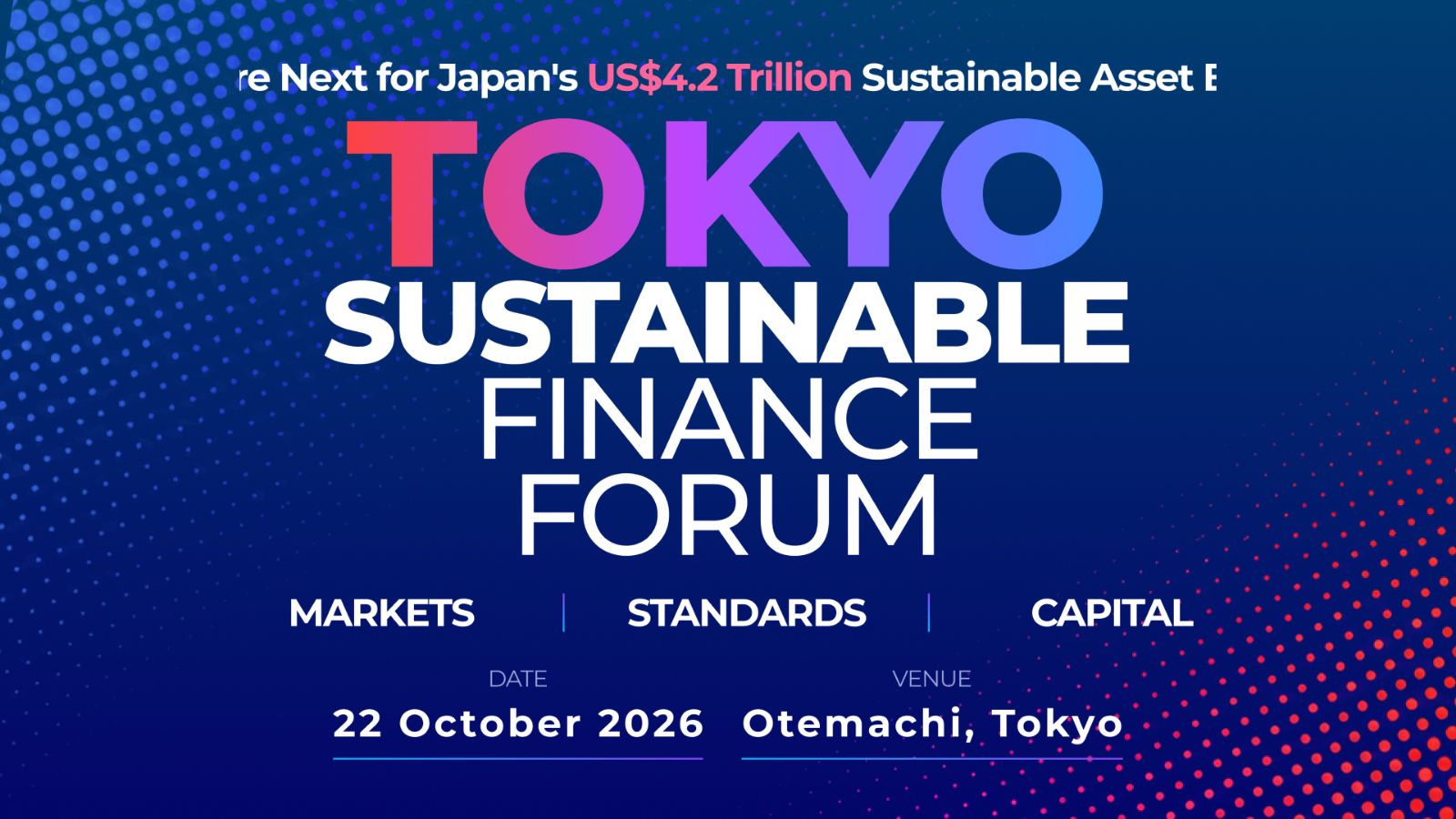
In the lead-up to COP31 and with the key climate action milestone of 2030 only a few years away, the Tokyo Sustainable Finance Forum 2026 will convene on October 22 to discuss the implementation roadmap for Japan’s US$4.2 trillion sustainable investment market.
Held at the Otemachi Place Hall & Conference in the heart of Tokyo, the event will bring together key institutions for high-level discussion on policy development and practical action — including the Government Pension Investment Fund (GPIF), the International Capital Market Association (ICMA), the Principles for Responsible Investment (PRI), LSEG (London Stock Exchange Group), the Financial Services Agency of Japan (JFSA) and the Japanese Bankers Association.
Register now to attend or reserve to view the archived sessions, complete with English subtitles, in early November.
Full speaker list and agenda here
Key Stories in Media
Japanese Media
-
-
-
- Assets under management in Japan reach record high of ¥1,249 trillion at end-June, up 10.4% from end-March (Jiji Press, 9/14)
According to the Investment Trusts Association, Japan, the combined total of investment trust assets and contract amounts for discretionary investment management and related businesses reached ¥1,249.3348 trillion at the end of June, marking a new record high. This was an increase of 10.4% compared with the end of March. - The “world with interest rates” begins in earnest: intensifying competition among financial institutions to attract deposits (Tokyo Shimbun, 9/13)
During the era of ultra-low interest rates, retail deposits were often seen as a burden because of the costs associated with maintaining accounts and operating ATMs. But as the “world with interest rates” begins in earnest, competition among financial institutions to attract deposits is heating up. The competition is spreading beyond simply offering higher interest rates to broader enhancements in overall customer services. - FSA Commissioner says agency will actively use AI in financial administration: “It will become extremely efficient,” with staff to be reassigned to understaffed inspection work (Yomiuri Shimbun, 9/9)
FSA Commissioner Yutaka Ito indicated that the agency will actively use AI in financial administration, saying of financial institution monitoring, “If we use AI, it will become extremely efficient. It can also read and interpret large volumes of documents.” He also said that efficiency gains from AI could allow staff to be reassigned to inspection work, which faces personnel shortages.
-
-
English Media
-
-
- Takaichi Keeps Key Cabinet Players, Sticks With Growth Direction (Bloomberg, 9/17)
Japanese Prime Minister Sanae Takaichi retained the core of her administration in a cabinet shuffle to double down on her pursuit of faster growth while trying to reassure investors that the nation’s finances are sound. The PM kept Satsuki Katayama as finance minister and Minoru Kiuchi as growth strategy minister, showing that she maintained full confidence in her economic team as she pushes forward with her efforts to overhaul traditional budget practices and generate more investment. - Mizuho’s First Female Wealth Manager Head Seeks Sixfold Growth (Bloomberg, 9/10)
Mizuho Securities Co.’s first female wealth management head is targeting sixfold growth in her firm’s asset advisory business. Tomoko Hama was picked in June as president of MiRaI Wealth Partners Co., 95% owned by Mizuho.
- Takaichi Keeps Key Cabinet Players, Sticks With Growth Direction (Bloomberg, 9/17)
- Japan’s revised governance code is asking more of corporates (FT Adviser, 9/9)
The revisions to Japan’s corporate governance code in July deliver one clear message: Japan’s governance story is no longer just about fixing what was broken; it’s increasingly about building a market where better-run companies can be recognised, rewarded and supported as they grow. For Japanese equities, this could help turn a decade of governance progress into a stronger foundation for long-term returns.
-
- Copyright © 2026 FinCity.Tokyo. Distributed for FinCity.Tokyo by Kreab K.K.