Interview: Bridging Japan and the World in Finance and Asset Management
16 DECEMBER 2025Interviews
Introducing Our Directors
Interview: Bridging Japan and the World in Finance and Asset Management
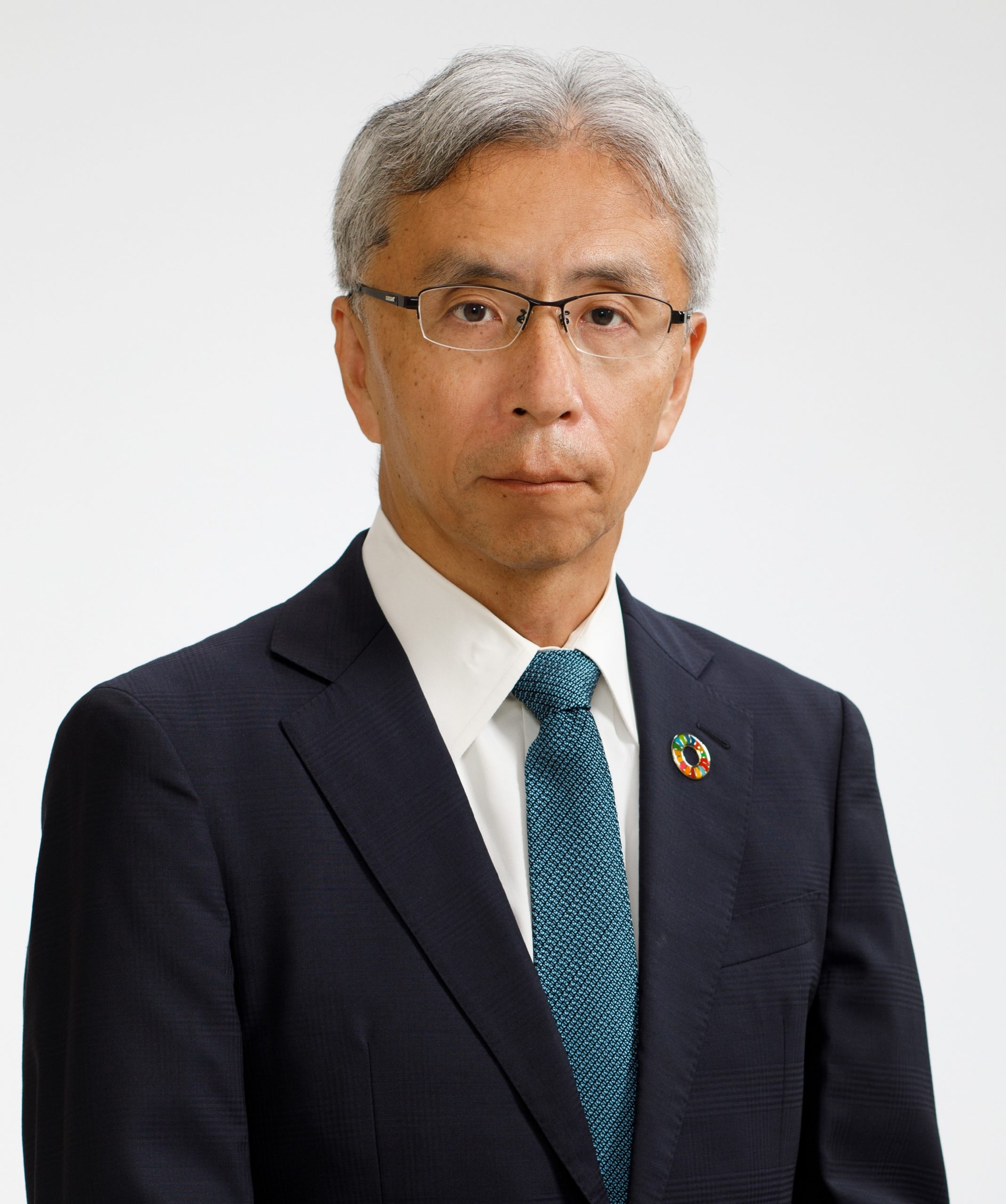
Yoshio Hishida, Executive Officer and Global Asset Management Officer (GAMO) of Sumitomo Mitsui Trust Group, shares his thoughts on how to strengthen Japan’s attractiveness to international finance and investment.
You’ve recently been appointed as a director. What are your aspirations and what do
you expect from FinCity.Tokyo’s future activities?
About ten years ago, I was involved in discussions of the “Working Group on Asset Management,” which was the starting point for the organization. Since then, I have participated in various capacities, from speaking at organized events to serving as a member of the Emerging Manager Program (EMP) roundtable. I have a strong attachment to FinCity.Tokyo. I believe the organization’s role is to be a bridge connecting Japan and the world in finance and asset management, and I hope to contribute even more toward fulfilling that mission.
How have Tokyo and the Japanese market changed over the last decade? What makes
Japan unique?
Both across the country and within the industry, numerous initiatives have been undertaken. Overseas interest in Japan remains strong, and I expect the flow of investment and capital into Tokyo and Japan to continue. We are seeing more diverse forms of investment and growth, such as listed companies going private and the emergence of crossover funds that invest in both public and private markets. Japan’s market is characterized by its diversity of sectors, ranging from manufacturing to services. Domestic asset managers are challenged to deliver solid returns across a variety of sectors, and I believe this market characteristic helps strengthen our asset management capabilities.
What are the challenges for Japan’s markets?
Japan’s appeal and strengths are still not being communicated sufficiently abroad. Consider outbound investment or expansion from Japan—very few simply venture overseas without prior knowledge; it’s normal to gather information beforehand, often from people familiar with that country or region. The same applies to inbound investment. It’s crucial that people overseas have contacts who can speak knowledgeably about Japanese markets and industries. For example, the recent surge in inbound tourism is the result of years of dedicated efforts to “create fans” of Japan. Japanese manufacturers and service companies are proactively expanding abroad. By contrast, I feel more can be done by the asset management and finance industries. We need not only to open Japan’s markets to the world, but also to proactively go abroad and raise awareness and interest in Japan.
International financial hubs like Singapore and Dubai may see most inbound capital flow back out, adding value in the process, and that works for their scale. For a market the size of Japan’s, it is vital that a meaningful portion of this capital stays onshore and is redirected into domestic investment to drive true economic growth. This is a greater challenge, requiring strategic industry-wide and public–private efforts where FinCity.Tokyo can serve as an important hub.
How can we increase the number of investors who support corporate growth with a long-
term perspective?
From a company’s standpoint, there is a disconnect: the investors during the initial venture stage are often completely different from those after IPO, with little continuity. Our group’s crossover fund is one solution, but there is more the industry as a whole can do. Japan’s
financial groups actually offer a range of functions—venture financing, asset management, asset administration—but there are still organizational barriers, and the entire value chain isn’t being fully leveraged. I believe each function and profession should broaden their
roles, creating some overlap so we can provide seamless support at every investment stage. The idea is to organically connect the various functions and services of financial groups to deliver a true “one-stop service.”
It’s important for institutional investors to want to take risks earlier and to view IPOs not as an exit, but as a milestone to continue investing afterward. Providing a full range of solutions and products for every stage of the investment chain is a major mission for us. I also believe FinCity.Tokyo can foster more opportunities for bridge-building and cooperation within the ecosystem.