Interview:Tokio Morita, Executive Director of FinCity.Tokyo for the January 2026 Newsletter
29 JANUARY 2026Interviews
An Exciting Year Ahead for Tokyo in the Year of the Horse
Tokio Morita, Executive Director of FinCity.Tokyo, reflects on his time leading the FinCity team so far and his busy agenda for the coming year.
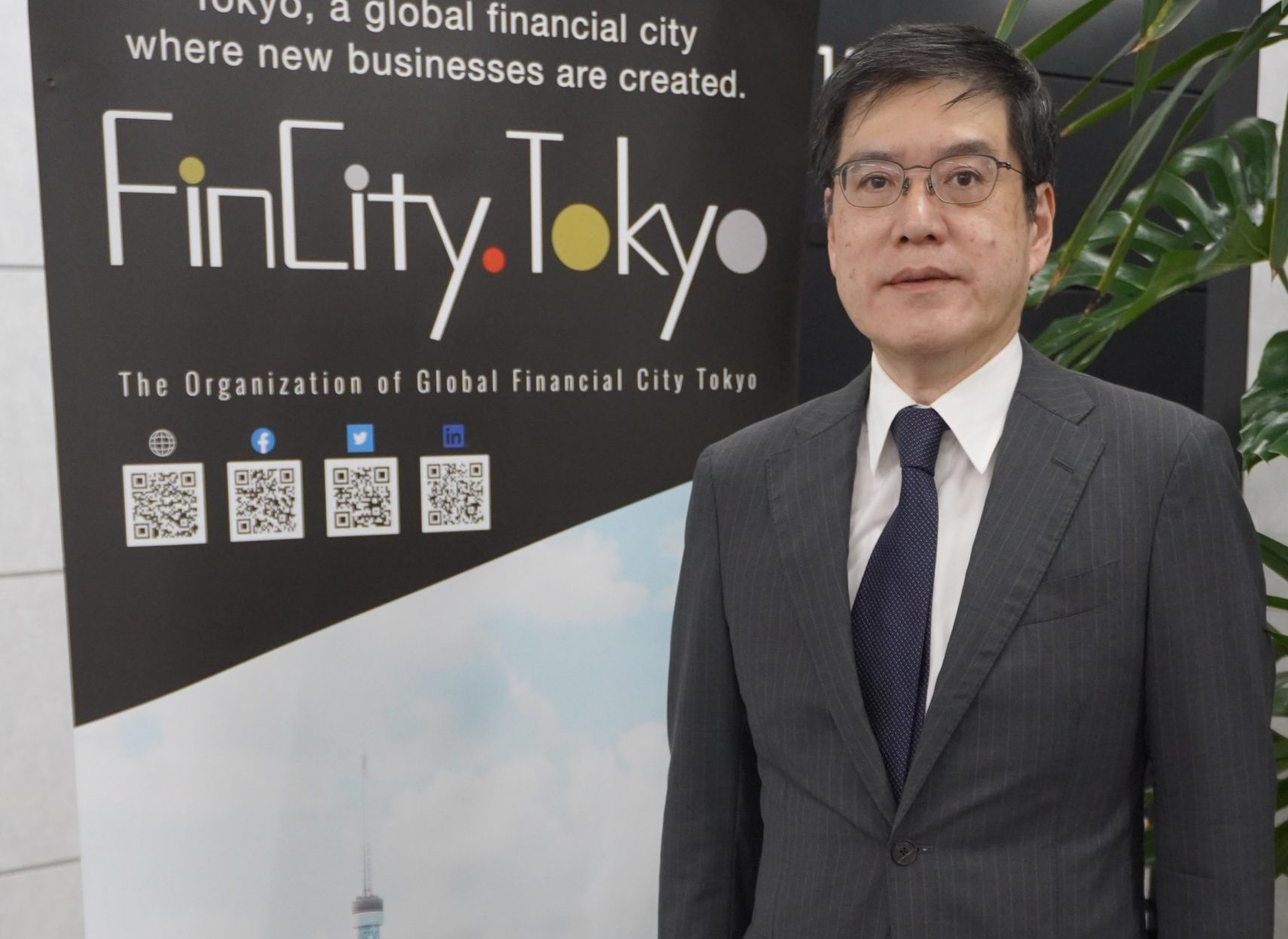
You joined FinCity.Tokyo as the Executive Director in June last year. How do you view your time at FCT so far?
The last six months have been very busy, but also very inspiring. It has always been clear to me that Tokyo and Japan offer huge opportunities to global investors, but at FinCity.Tokyo I have been able to see this from a new perspective. We have a very hard-working team that not only promotes Tokyo, but also carefully listens to the opinions of overseas stakeholders and then recommends reforms to our domestic decision-makers so that we can continue to make progress toward becoming an “asset management nation.”
Two activities in particular that helped us to convey Tokyo’s strengths overseas were the Transition Finance Forum in London in July, which we held together with City of London, TheCityUK and Jiji Press, and our panel discussion at the Singapore Fintech Festival. I’m happy to say both events attracted solid interest from media.
Fintech in particular is evolving fast in Japan. With finance going digital, we are seeing rapid evolution of cashless payments, growing interest in digital investment solutions, and much more. For fintech innovators from ASEAN and globally, Tokyo is a hub for such opportunities. FinCity.Tokyo can offer a wide range of hands-on support for fintechs looking to expand into Japan, including our Attraction U Program, which offers comprehensive support.
What’s in store for FinCity.Tokyo in 2026?
Our activities will follow two tracks. One is to engage more closely with domestic policymakers to continue reform of the financial ecosystem in Japan, and make solid progress on some unresolved issues. Here, I’m happy to say we are having productive discussion regarding FinCity.Tokyo’s recommendation to reform Japan’s Limited Partnership for Investment (LPS) scheme to ensure foreign investors do not risk facing corporate taxation when investing in an LPS. Right now, this is a factor holding back foreign direct investment into Japan.
The second track is that we will bolster our presence overseas. We have a busy schedule ahead with events and stakeholder meetings in Asia, Europe, Middle East and the US. In particular, we will hold our next FinCity Global Forum in New York in September. In February, we will also sign an MOU with Frankfurt Main Finance for increased collaboration.
How do you view Tokyo as a finance hub in the current rather volatile global environment?
We live in very turbulent times where even respect for international law seems to be in question.But despite all the friction and negative effects on markets, Tokyo closed the year 2025 with a 12-year high in overseas investors’ net purchasing of Japanese equities and a record year-end above 50,000 for the Nikkei 225.
Tokyo has many strengths, but right now Japan’s stable democracy, commitment to the rule of law, and trustworthy regulatory framework offers notable reassurance to investors. Financial Times also mentioned Tokyo’s ability to cope with geopolitical turbulence on December 30. I think this sense of stability and trustworthiness, in combination with a fast-growing asset management industry following the end of deflation, is a significant advantage for Tokyo right now. In Tokyo, investors and businesses can plan for sustained long-term growth.
What big developments in Japan’s finance and investment space do you see coming in 2026?
There is quite a bit happening! In terms of regulatory changes, we will see continued discussions on the Corporate Governance Code and upgrading the regulatory framework for crypto assets. JFSA will also launch a policy framework for regional revitalization that encompasses support for local businesses, reform of regional banking, digitalization and more. Moreover, the Nippon Individual Savings Account (NISA) program will be expanded to allow parents to invest on behalf of their children via dedicated Child NISA accounts, with a contribution of up to JPY 600,000 a year.
In green finance, Japan’s emission trading scheme (GX-ETS) will shift from being voluntary to mandatory from April 2026. This is a major milestone for Tokyo as a green finance hub. Rather than relying on peer pressure and commitments to move toward net-zero, GX-ETS will connect sustainability — which can be a rather vague concept — with a proper business framework that puts a price on emissions above a certain threshold. Investors will be able to build more resilient portfolios by directly assessing the carbon footprints, earnings at risk and transition indicators of listed firms.
Do you have New Year’s Message for overseas investors and businesses looking at Japan?
We would like to wish you all a prosperous Year of the Horse! Tokyo offers a unique combination of strengths, as well as the resilience and stability investors need for long-term growth in these uncertain times. We look forward to welcoming you to our city and helping you find opportunities here.