Interview: Awakening the Active Investor in Japan (Keiji Hattori, Managing Director and Head of Japan Capital Formation and Strategy at Sixth Street/FinCity.Tokyo board member)
11 MARCH 2026InterviewsNewsletters
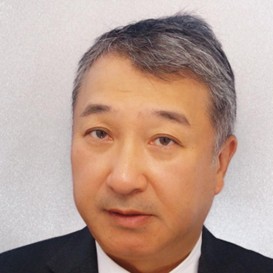
Keiji Hattori, Managing Director and Head of Japan Capital Formation and Strategy at Sixth Street, discusses the shift to a risk-return mindset among Japanese investors and how he strives to bring an active investment mindset to the market.
You are the first Japan hire for Sixth Street. Can you introduce the company and your aspirations in Japan?
Sixth Street is a global investment firm founded in 2009 with more than $125 billion USD in assets under management. The firm has more than 700 team members, which include over 300 investment professionals, and supports more than 250 institutional investors around the world. Japan is not new to Sixth Street as the firm has worked with notable partners in the region since the early days.
Sixth Street offers its Japanese investors not only scale, but also a very careful approach to investing rather than the passive style that is common here. This is why Sixth Street has been able to support so many leading institutional investors globally.
Another strength is Sixth Street’s “one team culture,” where all employees have a shared mission to deliver the best investment opportunities for its investors. While everyone has their own role at the firm, we are dedicated to collaborating across the entire Sixth Street platform. This is important because investors need asset managers to operate with a unified mindset.
Why is Sixth Street deepening its commitment to Japan?
Japan is an important, priority market for Sixth Street. This is a natural extension for the firm and builds on its efforts to deepen relationships in the region. Sixth Street sees significant opportunities in the region from both a capital formation and investment perspective. Sixth Street is going about this in a very intentional manner to ensure that the firm operates efficiently in this market. I look forward to partnering with the Sixth Street team globally to bring the full strength of the firm to deepen partnerships in the region.
What do you bring to your role as Director of FinCity.Tokyo?
I have always wanted to be a bridge between what is working well globally and what is still missing in Japan. I was born and raised in Japan, but spent a large part of my career overseas, so I share both mindsets. I started working in New York as a local hire at an accounting firm, then I got my MBA, and moved on to Wall Street. After about ten years there, I came back to Japan and eventually learned about FinCity.Tokyo, and felt I could contribute.
I really enjoy meeting with people from the Tokyo Metropolitan Government and FinCity.Tokyo and other members. The sense of mission is very strong, so that’s why I try to contribute as much as I can.
Indirectly, this aligns with what I’d like to accomplish at Sixth Street. Fundamentally, promoting Tokyo as a finance hub is really about bringing into Japan what is not currently here, which is essentially what Sixth Street is seeking to do as it deepens it commitment to the Japanese market as well.
Asset management is growing rapidly in Japan. Where do you see Tokyo and Sixth Street in this development?
Japan’s significant amount of capital has been talked about a lot. But over the past 30-40 years, the policies and knowledge to activate that capital just weren’t there. And the yen was expensive, which made capital flow outbound.
Contrast that with today when alternative investments by Japanese institutional investors easily surpasses $100 billion USD. It was half that five years ago and will only continue to grow. So, the growth in the alternative landscape is robust in Japan. For investment managers wanting to attract capital from Japanese investors, this means much more scrutiny, as investors become much more selective.
I’m excited by this trend of people shifting to a risk-return mindset. It doesn’t matter how many people you have on the ground, or how big your asset base is. Japanese investors will seek out managers who can provide a strong risk adjusted returns. I believe Tokyo’s key role as a finance hub is to provide a healthy growth environment for that kind of asset management and support this trend. And that is where I personally, and Sixth Street, hope to contribute with deep expertise.
Tokyo’s finance ecosystem is continually evolving. What are some areas where Tokyo can improve to further attract investors and asset management firms?
There are various aspects to this. But the usage of capital remains an issue, be it institutional capital or government capital. It all ties into the wealth of the nation. Strengthening the capacity to return wealth really is in Japan’s ultimate interest.
One aspect is that Japan lacks the engine to facilitate that. For example, Japan doesn’t have a sovereign wealth fund. There is no mechanism to invest capital overseas and return it to Japanese nationals as an investment arm of the nation.
Another aspect is the mindset. Fundamentally, it is still about preserving, rather than growing capital. Figuratively, some individuals in Japan still have a lot of money hidden away in closets or chests of drawers. This ties into financial literacy, which is still lagging behind, say, the US or Singapore.
But now, initiatives by the government and financial institutions are unlocking that capital so that people can get a better return. This is very positive, although investment in Japan tends to be passive. But the growth of invested capital will lead to greater financial literacy. The Nippon Individual Savings Accounts (NISA) are creating such a positive cycle: People open NISAs, see their money grow, become more financially literate, and gradually become more savvy investors. And, as a result, they will become more selective with whom they choose to manage their funds. It will not be about the size of the team, but about the actual return and actual track record. We’re seeing this “democracy of alternatives,” as I like to call it, developing in Japan now.
In closing, what is your message for foreign asset managers or investors looking to come to Tokyo?
Japan is not necessarily unique in its risk-return profile, but there is a cultural and business mindset that foreign investors and asset managers should consider. Localization is very important, as differences in conceptual understanding can become barriers to business as well. Be patient and understand who to work with, and you’ll see a promising market open up.