Interview: How Japan’s strong fundamentals drive investment
25 MARCH 2026InterviewsNewsletters
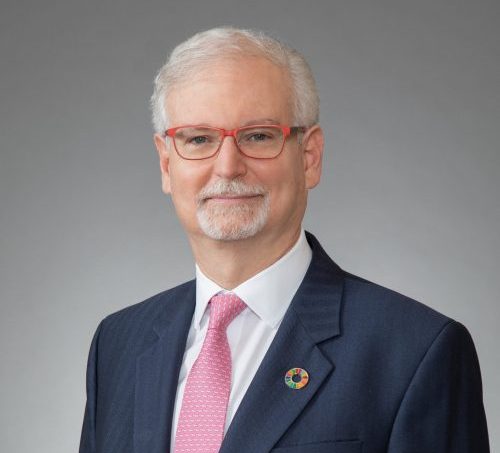
David Semaya, a veteran of Japanese finance now serving as Executive Chairman and Representative Director of Sumitomo Mitsui Trust Asset Management, reflects on the strong interest in Japan from global investors
How have perceptions of Tokyo as a finance hub changed over the years?
During the bubble years, Japan was viewed as a large opportunity. The equity market at the time was second only to the United States in terms of global market capitalization. But it was an extremely closed environment for non-Japanese players. The regulatory structures were pre-reform, and many of the business customs were seen as impediments to non-Japanese players. For example, you had separate regulators for institutional assets, mutual funds and investment trusts, and you had to manage them in separate companies.
Fast forward to today, and the Japanese market has opened up dramatically. It has become natural for both institutions and individual investors to allocate significant parts of their portfolios overseas. With that, many more non-Japanese asset managers have come to Japan because it’s now a place where you can source capital. We’re also seeing a lot of diversification into boutique managers, non-traditional managers, private assets, and so forth.
Can you tell us more about what you do as FinCity.Tokyo Ambassador?
I have lived in Japan and Tokyo for many years and been involved in finance here for a long time, so I am helping to tell the story why global asset managers should consider coming here and having a physical presence on the ground.
I was just at the Global Alts conference for alternative managers in Miami, where I joined a roundtable discussion on opportunities in Japan. The interest is very high, not only from asset managers but all kinds of funds. For example, we’re getting started in private assets here. Yes, there are players that have been in private assets for many years, but on a relative basis this market is still quite small, so a lot of the expertise involved in settlement and custody and being able to offer private assets to individuals still sits outside of Japan. But people see the opportunities and the reception has been very positive.
.
Japan is attracting interest from foreign investors despite the current global turmoil. What is your take on this?
Well, the world may be upside down, but stock markets around the world are at all-time highs. I don’t dismiss geopolitics in investing, but it’s the fundamentals that drive investment results, and I think Japan’s story is about the fundamentals.
I would say the changes in the behavior of corporations that followed the corporate governance changes in 2015, and the reforms that have happened since, are really the reason why we’re seeing such interest in Japan, although coming out of Covid and the return to positive inflation are powerful drivers as well.
We’re seeing a more balanced shareholder-stakeholder relationship among corporates. Assets that have been held on balance sheets for many years are being restructured and realigned. That, along with opening up to international asset managers, many of which are focused on engagement and activism, have unlocked a lot of value.
I think we will continue to see companies refocusing on growth strategies or handing back capital to shareholders over the next few years. Some companies will decide to delist because they don’t want to conform to the rules, but there are literally thousands of companies going through this process.
What challenges and opportunities do you see on the longer-term horizon?
I see two tracks. First, the big challenge for Japan domestically is demographics. So far, the response has followed the traditional Western model, via guest workers. The number of temporary workers has doubled in the past 10 to 15 years. However, I am not sure this policy will continue.
The long-term opportunity is the growth of what I call AI robotics. You’ve got AI that will take the place of those workers that don’t exist because of demographics, and then robotics for particular roles that are more physical in nature.
Japan is the canary in the coal mine. It leads in this area but Korea, China, Taiwan, Singapore all face demographic challenges of the same magnitude. Japan just got started earlier. You see the same challenges in Europe and the US as well.
The corporate governance changes will continue to extract value over the next five years. But beyond that, it will be about how well Japanese corporates, government, and individuals respond to the AI and robotics opportunities to resolve these demographic issues.
Second, there’s the green transition. This will not be a linear, one-track journey. There will be two steps forward and one step back, sometimes two. We will see new technologies appear and new challenges emerge.
But the idea of helping corporates set net-zero targets and then providing the finance mechanisms to help them along that journey should come naturally to Japan, given the strong relationship between corporates, industry and the banking system here.
Having said that, I see an opportunity for Japan to not only focus on indirect finance but also direct finance, meaning private equity or venture capital. This would also help develop domestic private markets further, which aligns with the goal to develop the finance hub credentials.